Pasi Joensuu – Founder & CEO at DIMEA Global
Is Sri Lanka late in digitalisation?
It’s a question I heard in Colombo, capital of Sri Lanka.
And it’s a question many countries are quietly asking themselves.
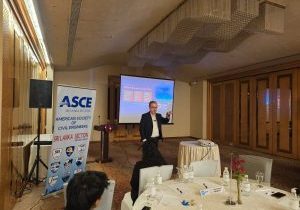
A month has now passed since the digitalisation seminar in Colombo.
With a little distance, the strongest memory from that day is not any specific technology or framework. It is a simple question that someone in the audience asked during the discussions:
Is Sri Lanka late in digitalisation?
It is an understandable question. Many countries look at developments elsewhere and feel that others are already further ahead. If digitalisation is happening somewhere else, the instinct is to assume that we should already be there as well.
But the longer I work with organisations in different parts of the world, the more I question that way of thinking.
Digitalisation is not a race
It is a process of building capability.
And capability rarely develops at the same pace everywhere.
One of the things that made the Colombo seminar memorable was the mix of people in the room. Representatives from government, universities, consultants, contractors, designers and students were all part of the same discussion. Decision-makers and technical specialists shared the same space.
That diversity created something valuable.
The conversation quickly moved beyond software and tools. People spoke openly about everyday realities: coordination challenges between organisations, the difficulty of sharing information between projects, and the frustration of losing valuable knowledge once a project ends.
Those are the kinds of conversations that actually move industries forward.
Digital transformation does not begin with technology.
It begins with shared understanding.
Part of my presentation reflected on Europe’s experience with digitalisation over the past two decades. Many European countries introduced BIM-based approaches to improve efficiency and transparency in public projects. Global research has suggested that the construction industry may lose between 25 and 40 percent of value due to errors, inefficiencies and fragmented information flows.
Digital tools have helped reduce some of those problems. Digital models can reveal design conflicts before construction begins. Machine control systems improve precision in earthworks. Information moves faster between the office and the site.
In operational terms, these developments have clearly improved project delivery.
Europe proved that digital tools can improve projects, and exposed a real limitation.
Europe has revealed something important – projects can succeed, but organisations do not automatically learn.
Many projects finish successfully, but the knowledge gained during those projects rarely becomes part of the organisation’s permanent way of working. Lessons are documented but not embedded. When the next project begins, teams often start again from roughly the same baseline.
Projects perform well.
Organisations struggle to multiply that success.
This gap between project performance and organisational capability is one of the most persistent challenges in the industry.
This gap between project performance and organisational capability is one of the most persistent challenges in the industry.
PASI JOENSUU – DIMEA GLOBAL
What is the role of leadership in digital transformation?
Another theme that emerged during the seminar was the role of leadership in digital transformation.
Technology plays an important role. It allows information to be visible, accessible and timely.
But technology does not define what is correct.
Leaders define quality thresholds. Organisations decide what level of accuracy is acceptable. Culture determines what “good enough” means in practice.
Technology simply implements those decisions.
When digitalisation is treated purely as a technical exercise, responsibility quietly shifts away from leadership. Teams experiment with different tools, new platforms appear across projects, and information becomes fragmented between systems.
But when leadership defines clear expectations and standards, technology becomes a powerful enabler.
The order matters.
People define. Technology executes.
Once organisations understand this distinction, digitalisation becomes far less confusing.
The same logic applies to data quality.
Systems can store and display information. They can make data accessible across teams and organisations.
Systems cannot decide whether the information is reliable. That responsibility belongs to people.
If inaccurate data is tolerated, digital platforms will simply reflect that tolerance. If reliability is demanded and verified, the value of the data increases.
In that sense, data quality is less a technical issue and more a cultural one.
Leadership defines what must be corrected and what can be accepted.
During the opening session I also challenged an idea that is becoming increasingly common in many countries: the ambition to create a Digital Twin.
In many discussions, the concept is described as a real-time digital representation of the physical world. An always updated digital reflection of reality.
That vision sounds powerful.
But it raises an important question.
What is the purpose of the twin?
If it mainly serves as a storage environment for information, simpler and more cost-efficient solutions may already exist. If the twin is meant to support decision-making, then data quality and timing suddenly become much more important. If it is meant to support estimating or forecasting, the requirements become even stricter.
Without a clear purpose, a digital twin risks becoming little more than an archive.
With a clear purpose, it can become a strategic tool.
The difference is not technology.
It is governance.
One interesting development since the seminar has been the response from Sri Lanka itself.
Over the past month, Colombo has quietly become one of the most active locations following DIMEA discussions on LinkedIn. Many new followers have appeared, and the comments coming from Sri Lanka often return to the same challenge: how information should be shared within teams and between individuals, across organisations, and from one project to the next.
Those conversations matter.
They show that the dialogue started in the seminar room did not end there.
Looking back now, the question about whether Sri Lanka is late in digitalisation feels less important than it did in that moment.
A more useful question might be this:
Is Sri Lanka asking the right questions?
Based on the openness of the discussions in Colombo, the diversity of voices in the room, and the continuing dialogue since then, the answer appears encouraging.
Digital transformation doesn’t happen overnight.
It develops through conversations like the one we had in Colombo.
And personally, it left me with one clear thought: I will need to buy another ticket to Sri Lanka.
Until then, thank you to everyone who participated in the seminar and continues the discussion today.
If you’ve read this far, I appreciate it. Are we already connected on LinkedIn?

Is Sri Lanka Late in Digitalisation? That’s a Wrong Question.
Pasi Joensuu – Founder & CEO at DIMEA Global Is Sri Lanka late in digitalisation? It’s a question I heard…

What digital transformation really requires – Expert view: Ishara Ranasinghe
At DIMEA, we believe that every successful transformation begins with understanding. In this guest contribution, Ishara Ranasinghe shares a personal…

How Digitalisation Can Finally Deliver the Results We Expected
After years of investment in tools and platforms, many organisations are still asking the same question. Why have we not…

Why Digitalisation Has Not Delivered Efficiency or Predictability in Infrastructure, Energy, and Utilities
By Pasi Joensuu For more than twenty years we have repeated a simple belief: If we buy better tools, our…

Guest Insight: Digital Transformation Starts With People – Scott Yoo, Autodesk
Digital transformation does not start with technology. It starts with people At DIMEA, we believe that every successful transformation begins…

The Triangle™ – A Clear Lens for Understanding Digital Project Friction
The Triangle™ – A Clear Lens for Understanding Digital Project Friction In infrastructure organisations, digital delivery challenges seldom come from…

The Role of a Leader in the Age of Digitalisation
Leadership has never been about perfection. It’s about direction, trust, and courage. Read more!

Digitalisation from Paper to Practice
Digitalisation from Paper to Practice There’s a lot of talk about digitalisation in infrastructure. But what does it actually mean…

Building a Future Company Through Digitalisation
At DIMEA, we believe the most valuable stories come from the people who are making change happen in practice. This…

The 5 Pillars of Digital Success – A Framework for Executives Who Want Real Change
The 5 Pillars of Digital Success – A Framework for Executives Who Want Real Change Why Digitalisation Fails – And…