

Article
You Can Price Risk. You Cannot Price Uncertainty
Most decision makers in infrastructure finance do not refuse risk. They refuse not knowing what they are really looking at.
“Data is the new oil.”
It is one of the most frequently repeated phrases in business and technology. Yet it rarely helps organisations answer two more useful questions: what do we actually mean by data, and what makes data valuable?
Across construction and infrastructure, organisations invest in systems, platforms and reporting tools on the assumption that better information will lead to better decisions. But data does not create the same value for everyone.
A project manager needs visibility into production progress. A quality manager needs evidence of compliance. Senior leadership needs to recognise emerging risks. A legal team may need records that establish what happened years after a project was completed.
All are discussing data. They are looking for different things.
Understanding these different needs helps explain what makes data valuable — and is essential to effective construction data management. The value of information depends on who needs it, what it supports, when it arrives and how long it must remain useful.
Data quality is often discussed as though information can be judged independently of its intended use. We call it incomplete, unreliable or poor quality without first asking what it needs to achieve.
Consider a daily site report.
For a project manager, a simple account of progress, completed activities and emerging risks may provide enough information to allocate resources and adjust priorities. For a legal team defending a contractual position months later, the same report may be insufficient if it lacks approvals, supporting evidence or traceability.
Conversely, detailed contractual records may be essential during a dispute while offering little help with today’s production decisions.
The information has not changed. Its purpose has.
Different stakeholders judge the same data against different requirements. The useful question is therefore whether the information is adequate for the decision, process or outcome it is intended to support.
Accuracy matters. But when information is needed to influence an outcome, timing can be just as important.
Imagine that a production issue is identified before the next phase of work begins. The team can investigate and correct it before the problem spreads. Discover the same issue three weeks later, and the organisation may already face rework, delays and additional costs.
The information is equally accurate in both cases. The opportunity to act is different.
A tender submission makes this distinction even clearer. Identifying a significant commercial risk before submission allows the contractor to revise pricing or reconsider its exposure. Identifying it one minute after the deadline may be too late to change the bid.
This is the decision window: the period during which information can influence a particular outcome.
Decision-makers often need information that is sufficiently accurate while that window remains open. Waiting for a complete picture can carry its own cost if the opportunity to act disappears.
Late information may still help explain what happened, support a claim or improve future decisions. But its value for the original decision has changed.
Organisations therefore need to understand both the quality of their information and the time available to use it.
For contractors, information serves three connected purposes: enabling timely action, maintaining continuity across the project and preserving evidence. Each places different demands on how data is collected, shared and retained.
Operational information helps teams understand what is happening and what requires attention today.
Where is production falling behind? Which risks are emerging? What needs to change before the next activity begins?
The value lies in the ability to intervene while there is still time to influence the outcome. A useful site update enables people to adjust resources, coordinate work or prevent an issue from escalating.
When information arrives late or fails to reach the responsible person, decisions begin to rely on assumptions. Problems may remain invisible until they appear as delays, defects or cost overruns.
For operational purposes, information must reach someone who can act on it while action still makes a difference.
Projects move through planning, design, procurement, construction, handover and acceptance. Information needs to remain connected as responsibilities move between teams and organisations.
A design decision may contain an assumption that matters during construction. A change made on site may affect final acceptance. If the reasoning or supporting records are lost during a handover, the next team inherits an incomplete picture.
The consequences are familiar: repeated investigations, recreated information, misunderstandings, rework and longer acceptance processes.
From a delivery perspective, finishing construction is not the same as securing acceptance. Information must connect what was planned, what changed, what was built and what was accepted.
Continuity preserves the context people need to understand and trust the outcome.
Some information retains its value long after the work is complete.
What was done? When was it done? Who approved it? What information was available when a decision was made?
These questions become critical during payment validation, claims management, compliance reviews and disputes. At that point, records must establish what happened and support the organisation’s position.
A contractor may know that it fulfilled its obligations and still struggle to demonstrate that fact. Reliable, traceable records help close that gap.
This creates a different requirement from operational reporting. Information that is sufficient to guide today’s work may need additional documentation to serve as evidence years later.
Recognising that difference early helps organisations preserve the records they will eventually need.
Technology provides essential tools for collecting, storing, sharing and processing information. To create value from those tools, organisations also need clarity about the work the information must support.
A dashboard can display accurate figures and still fail to help if they arrive after a critical decision. A document platform can hold complete records while making it difficult to find the approval that matters. An analytics tool can identify a risk without ensuring that someone takes responsibility for responding.
Effective digitalisation connects information to decisions, responsibilities and action. It also preserves the context and evidence needed throughout the project and beyond.
That connection helps create predictability: teams can recognise risks earlier, understand the basis of decisions and demonstrate that agreed outcomes have been delivered.
The starting point is four questions:
Who is the information for?
What is it being used for?
When is it needed?
How long must it retain its value?
The answers define what adequate quality looks like, how quickly information must move and what must be preserved.
Data can guide operations, support decisions, maintain continuity and protect contractual positions. The same information may serve several of these purposes, each with different requirements.
Before asking whether data is good or bad, we need to ask the question that gives that judgement meaning:
Good for what?
Most decision makers in infrastructure finance do not refuse risk. They refuse not knowing what they are really looking at.
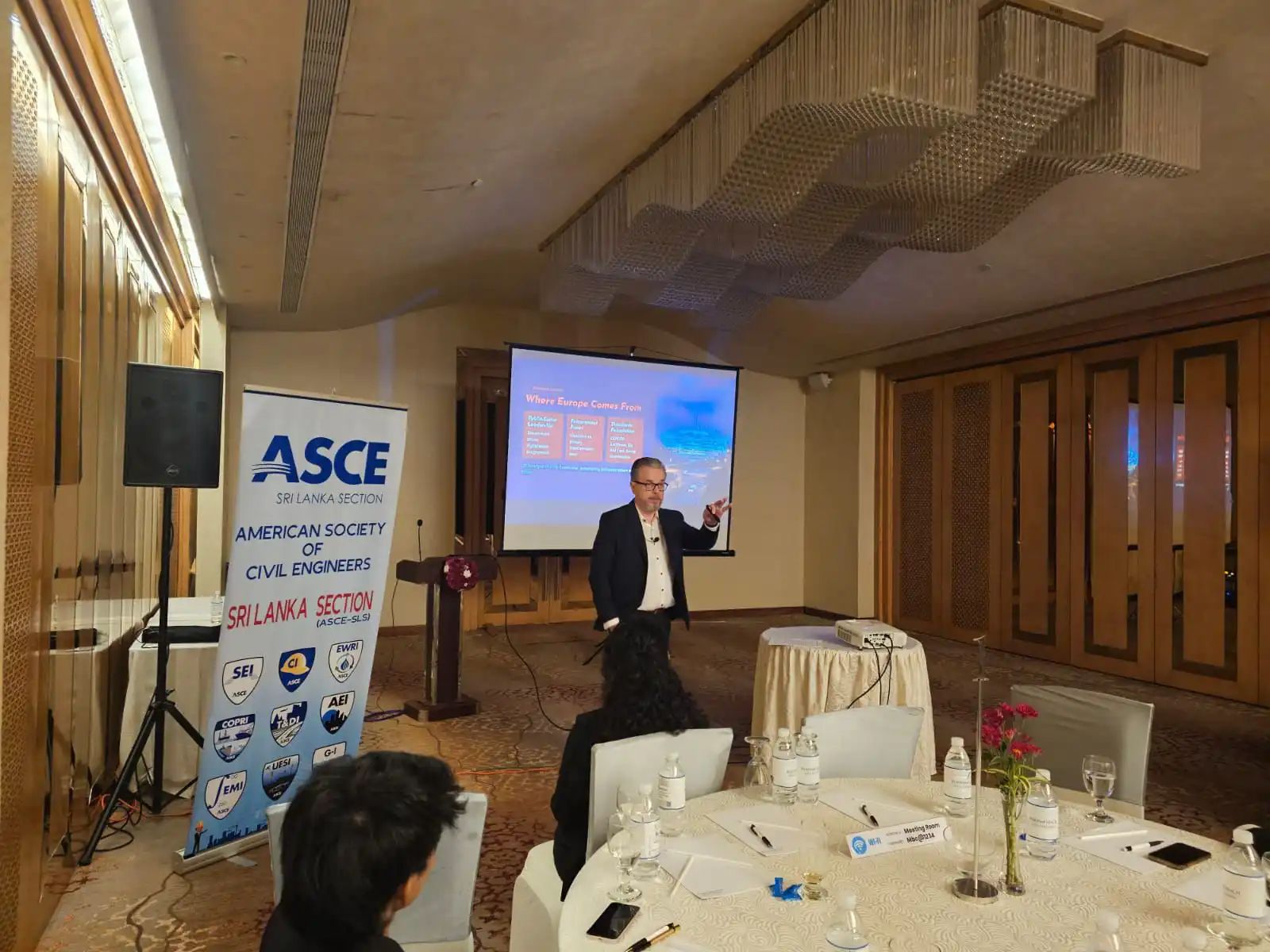
Is Sri Lanka late in digitalisation?

After years of investment in tools and platforms, many organisations are still asking the same question. Why have we not seen the performance improvements that digitalisation promised?