

Article
You Can Price Risk. You Cannot Price Uncertainty
Most decision makers in infrastructure finance do not refuse risk. They refuse not knowing what they are really looking at.
There’s a lot of talk about digitalisation in infrastructure. But what does it actually mean in the everyday reality of a construction site? For me, this has been the key question for years.

Digitalisation too often remains just talk if information is fragmented, processes are clunky, and people see no reason to commit to goals that live only in strategy documents.
That is exactly why I founded DIMEA.
I’ve seen first-hand how projects drown in fragmented data and complex reports. Everyone has their own tools, but no one sees the whole picture. I wanted to change that.
DIMEA was born to bring clarity and trust into how projects are managed – and how people can do their work.
My role is to sit next to the client and ask: “What works for you, what doesn’t – and why?”
Everyone knows digitalisation is inevitable if a company wants to stay competitive. The challenge is often not why but how – how to move forward in a way that makes both economic and operational sense.
What I can provide is a step-by-step manual for integrating digitalisation into construction projects cost-effectively, and with a continuous, working process.
Quite often a client says: “We already have these technologies in place. Everything is fine. We’ve even hired an expert for this role.”
But here’s the catch: parts of the process may have been polished to work well, yet they fail to integrate with the company’s overall operating environment. Even good ideas remain dependent on individuals – and at worst, this costs the company its reputation, significant financial losses, and even penalties.
As the conversation deepens, it becomes clear that many things are still person-dependent. Information doesn’t move unless someone prepares it for someone else. This is a problem clients don’t always see themselves – and it’s my job to bring those questions to the surface.
The essence of digitalisation is this: people should have access to what they need without someone else having to prepare or deliver it for them. When that happens, work becomes easier and faster at every level – and it often results in significant financial savings.
Every engagement starts with a conversation. I want to understand why we’re sitting at the same table and what triggered the request for a meeting.
That’s why I ask questions like:
These answers quickly lead us to what really matters. Often, we dig into the problem until we reach the root cause.
When I begin with a new client, I don’t bring ready-made solutions. We start with an honest dialogue and the kinds of questions that reveal what the client hasn’t yet considered.
The first step is creating visibility: where are we now? From there, we move forward with small but impactful changes – for example, clarifying a single process or cleaning up data so that everyone is looking at the same truth.
This work is guided by DIMEA’s five pillars:
For me, it’s not enough to write these into a fancy presentation. I want to see them alive on a Monday morning at the construction site – as concrete actions and real benefits.
The most common moment when a client recognises the value is when chaos turns into clarity.
One client told me that their surveyors had long struggled with getting the information they needed. Through our collaboration, they found a shared way of working that gave surveyors real-time data directly on-site. The result was saved time, peace of mind, and confidence in their work – they could focus on the essentials and act proactively.
For project leaders, it meant having a real-time view they could trust and base decisions on.
Another client summed it up perfectly:
“I didn’t know it could be this clear. We’ve been doing this for ten years in a much harder way.”
What motivates me most is being at the client’s side and seeing how things change for the better. The best moment is when someone says: “Now this finally works – and I don’t have to waste extra time figuring things out.”
People want to do their jobs well – but too often the structures get in their way. When they are given clarity and trust, they have the opportunity to show their full professional potential.
Digitalisation is not a technology project.
It is a people project.
Most decision makers in infrastructure finance do not refuse risk. They refuse not knowing what they are really looking at.
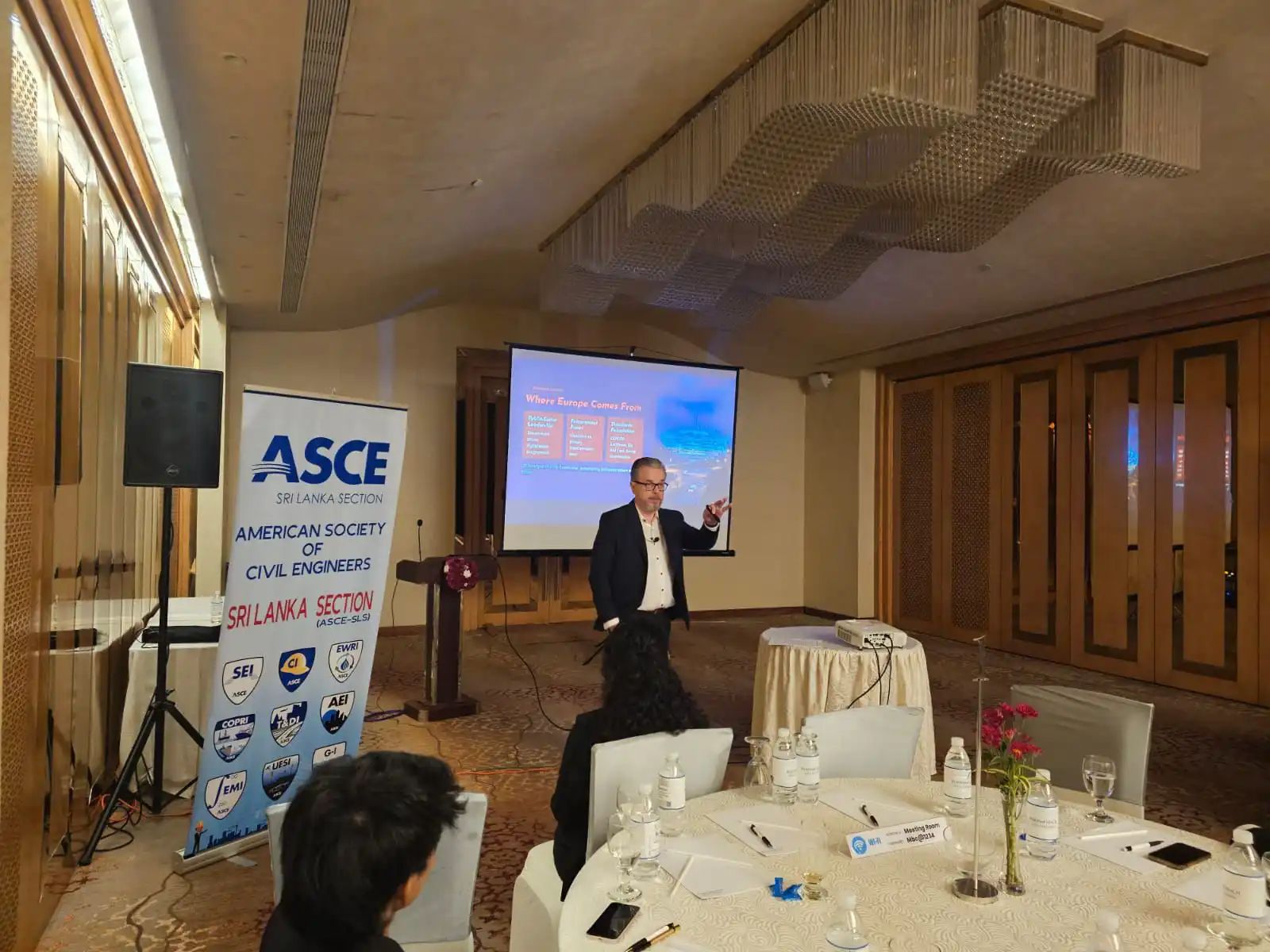
Is Sri Lanka late in digitalisation?

After years of investment in tools and platforms, many organisations are still asking the same question. Why have we not seen the performance improvements that digitalisation promised?